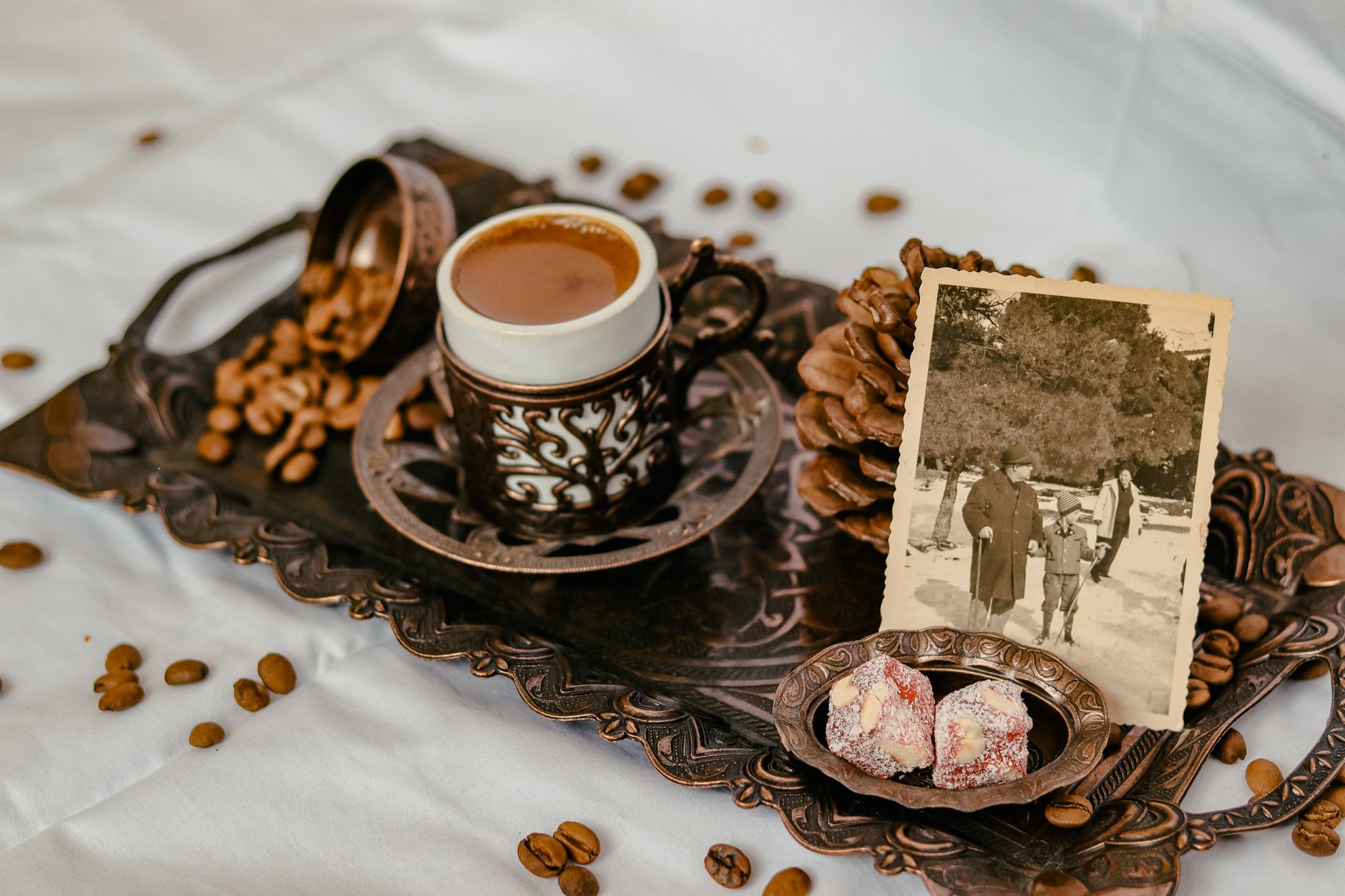
The Bean Behind the Tradition
When people talk about Turkish coffee, they often focus on the brewing method — the cezve, the slow heat, the thick foam. But the bean itself deserves its own conversation. Turkish coffee is not a variety of coffee plant. It is a preparation style, but the beans chosen for it carry specific qualities that make the result taste like nothing else.
Roast Level and Grind
Turkish coffee traditionally uses a medium-to-dark roast. The roast level creates the bittersweet base that balances the natural sweetness added during brewing. But what truly defines the coffee is the grind: it is ground to a powder, finer than any espresso you will find in a Western cafe. That ultra-fine texture is what produces the characteristic sediment and the silky, thick consistency in the cup.


Arabica as the Preferred Base
Most authentic Turkish coffee blends start with Arabica beans. Arabica offers the lower acidity and nuanced sweetness that the Turkish preparation brings forward. Some blends add a small percentage of Robusta for body and a stronger caffeine kick, but the dominant character is typically Arabica-driven.
Blending for Occasion, Not Just Flavor
In many Middle Eastern and Eastern Mediterranean households, the coffee blend is chosen with the moment in mind. A morning cup might be made slightly lighter; the coffee served to guests after a meal is often stronger and more fragrant, sometimes prepared with cardamom or mastic. The bean selection is the first decision in that ritual.
What to Look For When Buying
If you are sourcing Turkish coffee beans online, look for roasters who describe the grind as Turkish-fine or who offer pre-ground Turkish coffee specifically. A coarser grind will not suspend correctly in water and will fail to produce the texture and mouthfeel the tradition is built on. Also check whether the blend is designed to be brewed plain or with spice — that affects everything from roast depth to origin selection.
The Cultural Weight of a Simple Bean
For diaspora communities, Turkish coffee beans are not a novelty or a premium flex. They are a sensory shortcut to a grandmother's kitchen, a late-night conversation, a specific kind of hospitality that does not require much to produce but means everything to receive. Choosing the right bean is the first step in honoring that.