
What You Need Before You Start
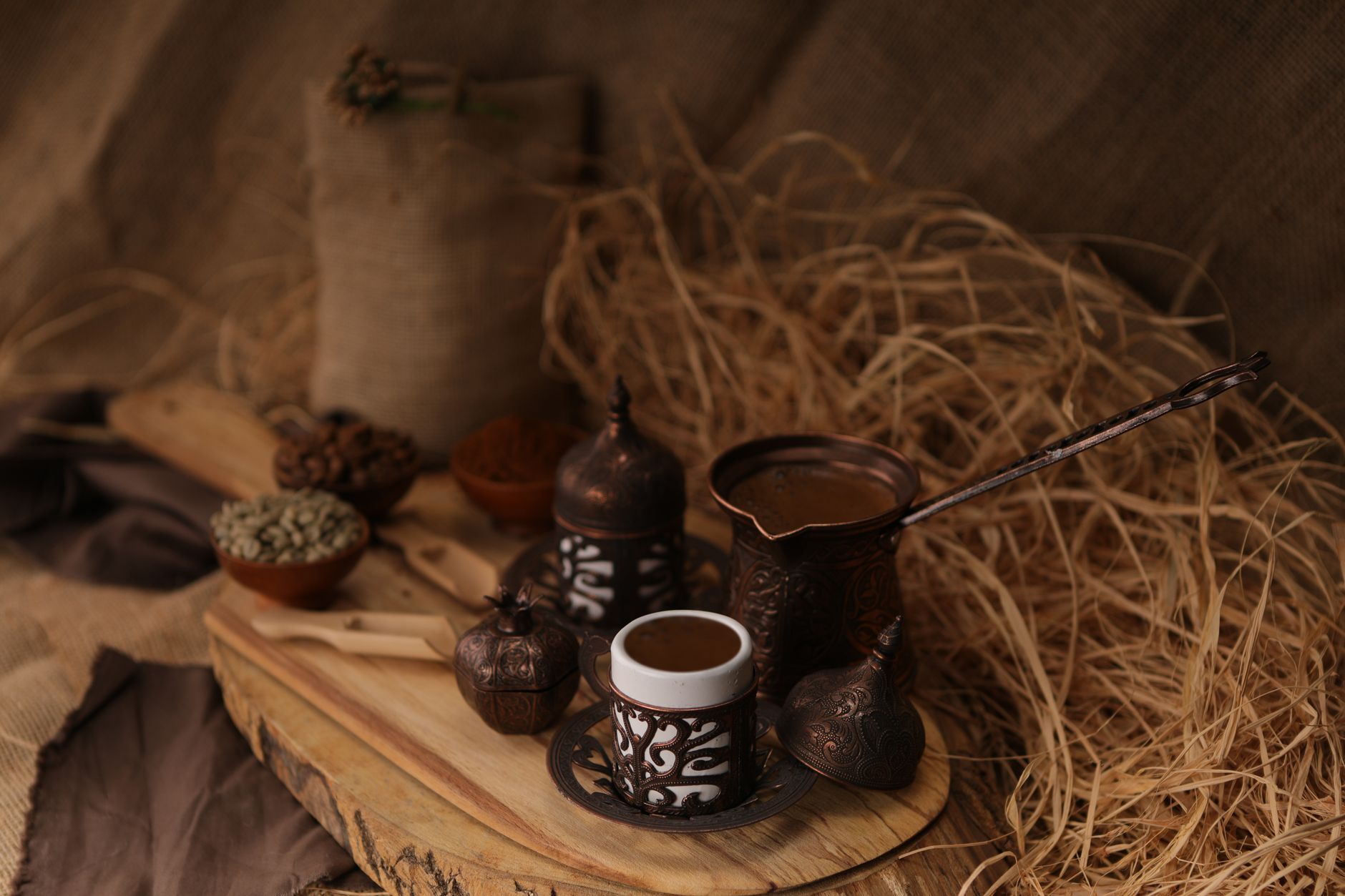
Making Turkish coffee requires three things: a cezve (also called an ibrik), finely ground Turkish coffee powder, and a heat source you can control. The cezve is a small, long-handled pot, usually copper or stainless steel, with a wide base that tapers toward the top. This shape is functional — it encourages the foam to rise rather than spill. You do not need an expensive model. A basic cezve that fits one to two servings is sufficient for home use.
The Ratio
The standard starting ratio is one heaping teaspoon of coffee per small cup of water (roughly 60–75ml). Adjust from there based on your strength preference. Turkish coffee is served in small cups — closer to espresso volume than to a standard drip mug. Do not try to scale it up in a larger vessel; the brewing chemistry changes with volume and surface area.


Sugar Goes In Cold
If you want sweetened Turkish coffee, add the sugar before you apply heat — not after. Turkish coffee is traditionally sweetened during brewing, not in the cup. Common levels are unsweetened (sade), slightly sweet (az şekerli), medium sweet (orta), and very sweet (çok şekerli). Add sugar to the cold water and coffee together before placing the cezve on the heat.
The Heat and the Foam
Use low to medium-low heat. The goal is a slow, controlled rise. As the coffee heats, a dark foam will begin forming on the surface. When it rises close to the rim of the cezve, remove it from heat briefly, allow the foam to settle slightly, then return it. Some prefer to spoon a small amount of the foam into the cup first, then return the cezve to heat for the second rise before pouring. Two rises produce a richer result than one.
Pouring and Waiting
Pour slowly and evenly. Let the cup sit for 30 to 60 seconds before drinking — the fine grounds need time to settle to the bottom. Do not stir. The sediment is not a defect; it is part of the method. You drink until you reach the grounds at the bottom, then stop.
What Makes It Different From Every Other Coffee Method
Turkish coffee is not filtered. The grounds are in contact with the water through the entire process, which produces a different extraction chemistry than espresso or drip. The result is a denser, more textured cup with a pronounced mouthfeel. Learning the method takes two or three attempts. After that, it becomes fast and intuitive — and far more rewarding than anything a single-serve machine can produce.